Stay in the home you love while turning your equity into tax-free cash. I'll walk you through how much you may qualify for and whether it's the right fit for your retirement.

Leave your name and number and I'll call you back within one business day — at whatever time suits you. Plain answers, no pressure, no obligation.
🔒 No cost, no obligation — your information stays private.
Or call me now — Click to Call“We were worried about keeping up with costs in retirement, but we didn’t want to leave the home we love. Anneka explained how a reverse mortgage works in plain language and never pushed us in either direction… Now we’re finally enjoying retirement the way we’d hoped.”
Serving Ontario & Alberta
Backed by Dominion Lending Centers Expert Financial
Access to 76+ Lenders
 TD
TD Scotiabank
 BMO
BMO First National
 Home Trust
 National Bank
 Equitable Bank
 Desjardins
 Manulife
A 60-second welcome from Anneka — what this page covers and what happens after you reach out.
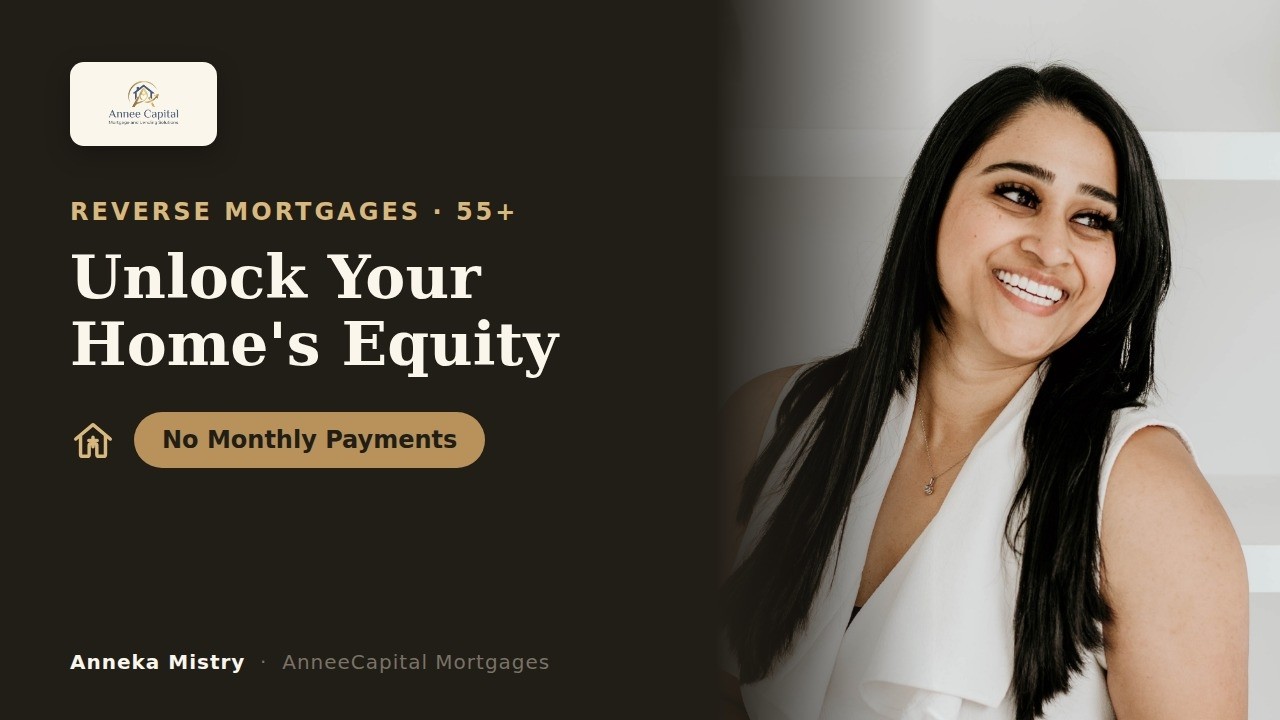
A reverse mortgage lets homeowners 55+ borrow against their home's equity without monthly payments — the loan is repaid when you sell, move, or pass away.
Access your equity without adding a monthly payment to your budget. The loan, plus accrued interest, is repaid when you sell, move, or pass away.
Funds from a reverse mortgage are not considered income, so they're not taxed and won't affect Old Age Security or Guaranteed Income Supplement benefits.
Keep ownership and stay in the home you love, near your community and memories — no need to downsize or move to access your equity.
Your bank can only offer you their own reverse mortgage product, if they offer one at all. I compare providers across the market — using one application, not several — so you see every option before you decide.
From first conversation to funds in your account, here's exactly what the process looks like.
We talk through your goals and whether a reverse mortgage fits your retirement plan — no obligation, no cost.
You submit your application and a licensed appraiser confirms your home's current value.
Required by law before you sign, so you fully understand the terms and your rights.
Final terms are confirmed and the mortgage is registered against your home, just like a traditional mortgage.
Receive your funds as a lump sum, scheduled advances, or a combination of both — whatever suits your plans.
A reverse mortgage isn't about the money itself. It's about the mornings, the walks, the visits from family, and the home you've already made yours.
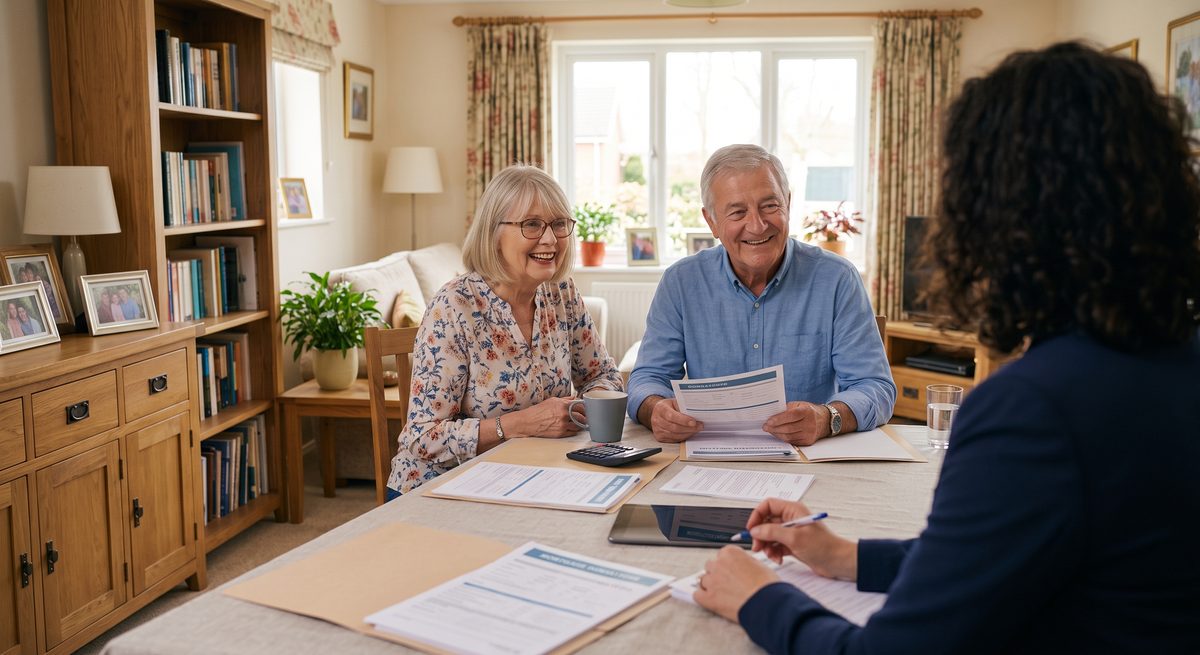
We'll help you build a step-by-step plan that fits your lifestyle.
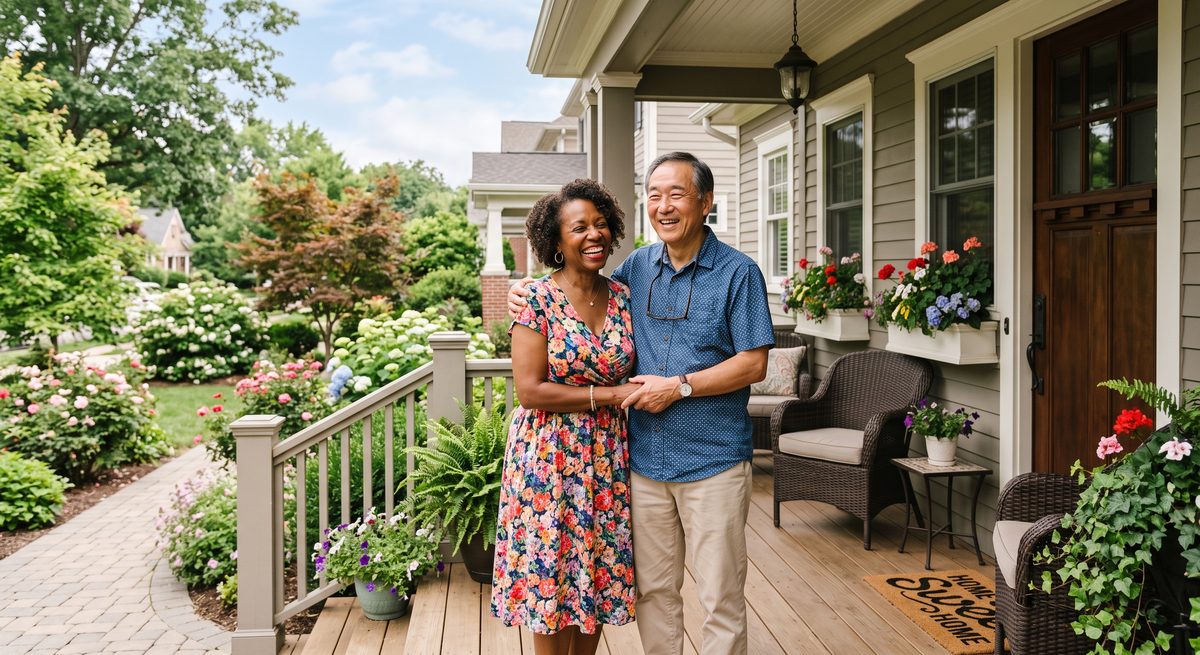
Stay right where your memories are, in the home you've already paid into for years.
Get a quick estimate based on your home's value and age.
Reverse mortgages are available to homeowners 55+. The percentage of home value you can access rises with age. Actual amounts vary by lender, property type, and location. Request a callback for an accurate number →
Three common ways to access home equity in retirement — here's how they stack up.
| Reverse Mortgage | HELOC | Downsizing | |
|---|---|---|---|
| Qualification | Age 55+ and home equity — no income or credit check | Good credit (~680+), stable income, must pass the mortgage stress test | Ability to sell and move |
| Monthly payments | None required | Required — interest, and often principal | None on the portion you own outright |
| Interest rate | Fixed or variable, typically higher than a HELOC | Variable, tied to the lender's prime rate | N/A |
| How much you can access | Up to ~55% of appraised value | Up to ~65% of appraised value, subject to equity and income requirements | 100% of your equity, minus selling costs |
| What happens to your home | You keep it; loan is repaid when you sell, move, or pass away | You keep it; you're responsible for ongoing payments | You leave it for a new, often smaller, home |
| Costs to consider | Setup fee, appraisal, independent legal advice — roughly $2,300-$3,000 | Appraisal and legal/closing fees, generally lower to set up | Realtor commission, land transfer tax on your next home, moving costs |
Rates, qualification thresholds, and program details shown are general and current as of 2026, and are subject to change and lender variation. This is educational information only — I can walk you through the real numbers for your specific home and goals.
Reverse mortgages carry a lot of outdated assumptions. Here's what's actually true.
Fact: You keep full legal ownership and title. The lender simply registers a mortgage charge against the property, the same way any mortgage lender does.
Fact: Any equity left after the loan is repaid goes to you or your estate. Many families still pass on meaningful equity.
Fact: Canadian reverse mortgages include a no-negative-equity guarantee — you or your estate will never owe more than the home's fair market value.
Fact: Qualification is based on your age and home equity — not income, employment, or credit score.
Fact: You can sell or move at any time. The loan is simply repaid from the proceeds, and prepayment options exist if you'd like to pay it down early.
Fact: Many homeowners use it proactively — to renovate, help family, travel, or simply take the pressure off a fixed income.
A reverse mortgage lets homeowners 55+ borrow against their home's equity without monthly payments — the loan is repaid when you sell, move, or pass away. It can supplement retirement income or cover major expenses while you stay in your home. I can walk you through whether it fits your situation and how it compares to other equity options.
Each unlocks home equity differently: a reverse mortgage requires no monthly payments but accrues interest over time, a HELOC needs regular payments but usually costs less long-term, and downsizing frees up equity outright but means moving. The right fit depends on your income, health, and how long you plan to stay in your home — worth a conversation to compare real numbers.
Yes. You retain full ownership and title to your home, and can live there as long as you like as long as it remains your primary residence and property taxes and insurance stay up to date. The loan is only repaid when you sell, move out permanently, or pass away.
The loan balance, including accrued interest, is repaid from the proceeds of the home's sale. Any remaining equity goes to you or your estate. Most reverse mortgages in Canada come with a no-negative-equity guarantee, so you or your estate will never owe more than the fair market value of the home.
You (and any co-owner on title) need to be 55 or older, and the home needs to be your primary residence in Canada — meaning you live there at least six months of the year. Most lenders also expect the property to be worth at least $250,000. There's no income, employment, or credit score requirement, which is what makes reverse mortgages accessible to retirees who wouldn't qualify for a traditional loan.
Typically up to 55% of your home's appraised value, depending on your age, the property's location and condition, and current interest rates — the older you are, the more you generally qualify for. If you own the home with a spouse, the amount is based on the younger spouse's age. I can give you a realistic estimate based on your specific home and situation.
Expect a lender setup fee (roughly $995-$1,795), an appraisal ($300-$600), and independent legal advice, which is required by law before you sign (roughly $300-$700) — typically $2,300-$3,000 all in. Most of this is deducted from your proceeds rather than paid out of pocket. Worth knowing: interest rates on reverse mortgages usually run higher than a traditional mortgage or HELOC, since there are no monthly payments required.
No. Reverse mortgage funds are a loan, not income, so they're not taxable and don't count against OAS or GIS eligibility — which matters a lot for GIS recipients, since regular income can reduce that benefit. The one caveat: if you invest the funds and they earn interest, dividends, or capital gains, that investment income is taxable and could affect income-tested benefits.
Yes — no lender can refuse repayment, in part or in full, at any time. Many allow up to 10% of the balance to be prepaid each year with no penalty, or let you make voluntary interest payments to slow the balance from growing. Prepayment charges can apply outside those allowances, but they're waived entirely when the last borrower passes away, and often reduced if you move into a retirement or care home.
Both owners on title need to be 55+ to be co-borrowers on the reverse mortgage itself. A younger spouse can still be on title, but not as a borrower — which carries real risk, since the loan can become due if the borrowing spouse passes away or moves into long-term care. If this applies to you, it's worth talking through how to structure things before you commit.
The portion of your home's value that you own outright — its market value minus any money owed against it.
The percentage of your home's appraised value you're borrowing. Reverse mortgages typically max out around 55% LTV.
Interest that adds to your loan balance over time instead of being paid monthly, since a reverse mortgage requires no regular payments.
A licensed professional's assessment of your home's current market value, used to determine how much you can borrow.
A built-in protection ensuring you or your estate will never owe more than your home's fair market value at the time it's sold.
Legal counsel, separate from the lender, that you're required to get before signing. It confirms you understand the terms before committing.
The home you live in for at least six months of the year. A reverse mortgage must be secured against your primary residence.
Paying down some or all of your reverse mortgage balance before it's due, which can reduce the interest that accrues over time.
A revolving credit line secured by your home that requires monthly payments and income/credit qualification, unlike a reverse mortgage.
Everything you own at the time of your passing, including any remaining home equity after your reverse mortgage is repaid.
There's no wrong way to reach out — call, video chat, email, or meet in person at the brokerage office. Whatever's easiest for you, I'll answer your questions in plain language, with no pressure and no cost to ask.